Every Friday at La Huninguoise
Isigny oysters No. 3
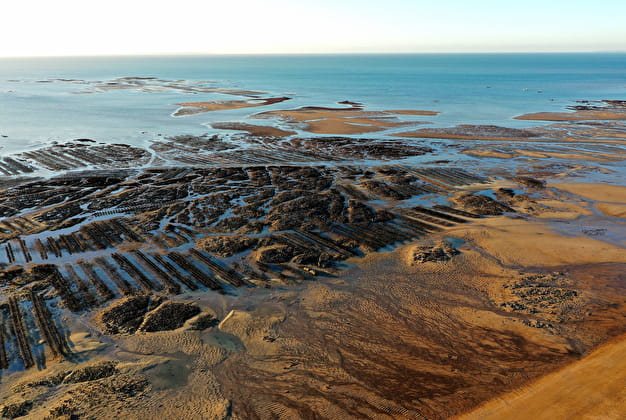
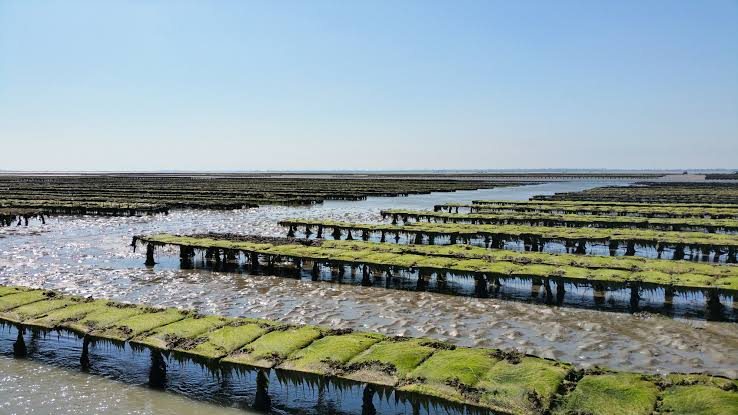
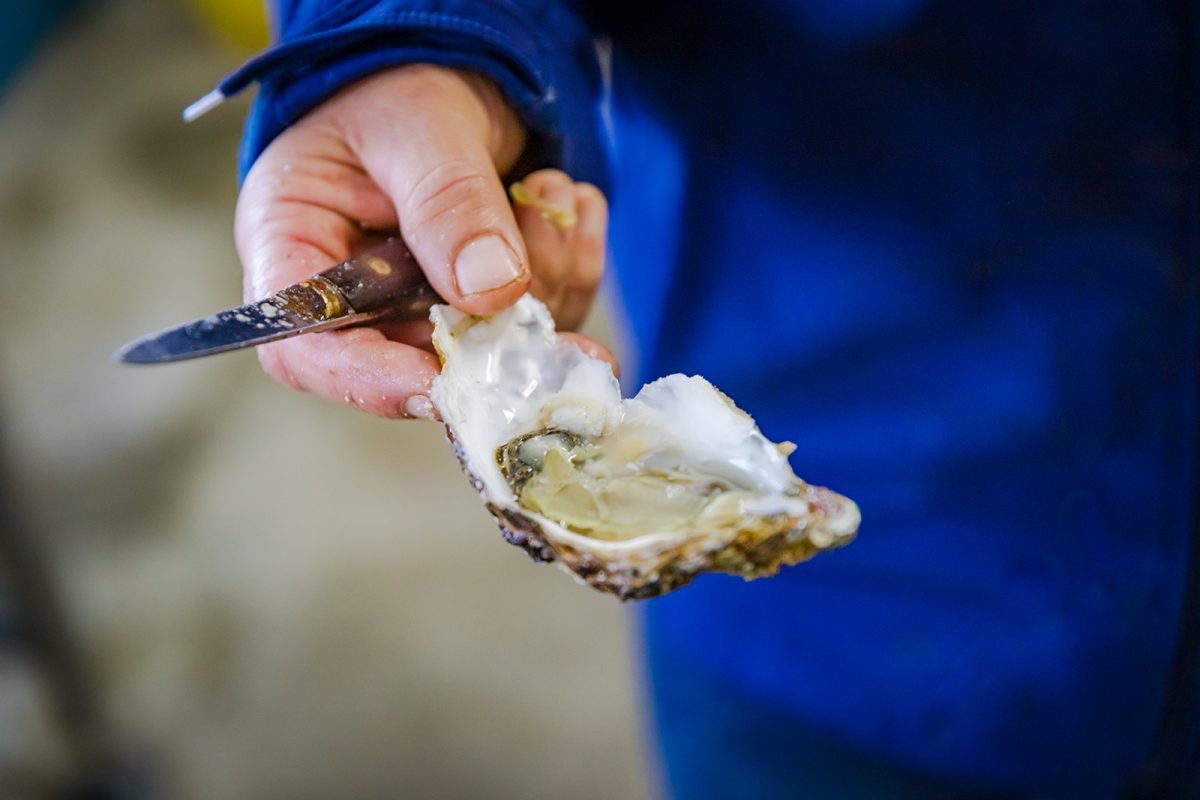
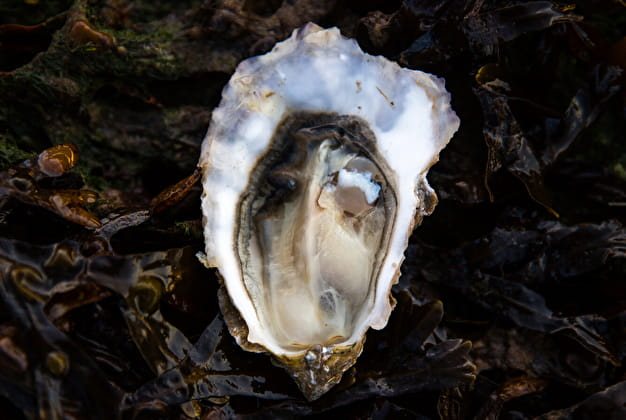
Photos: oyster beds in Normandy. Opening an oyster: Sabina Lorkin / Normandie Tourisme.
From the Channel to the Rhine
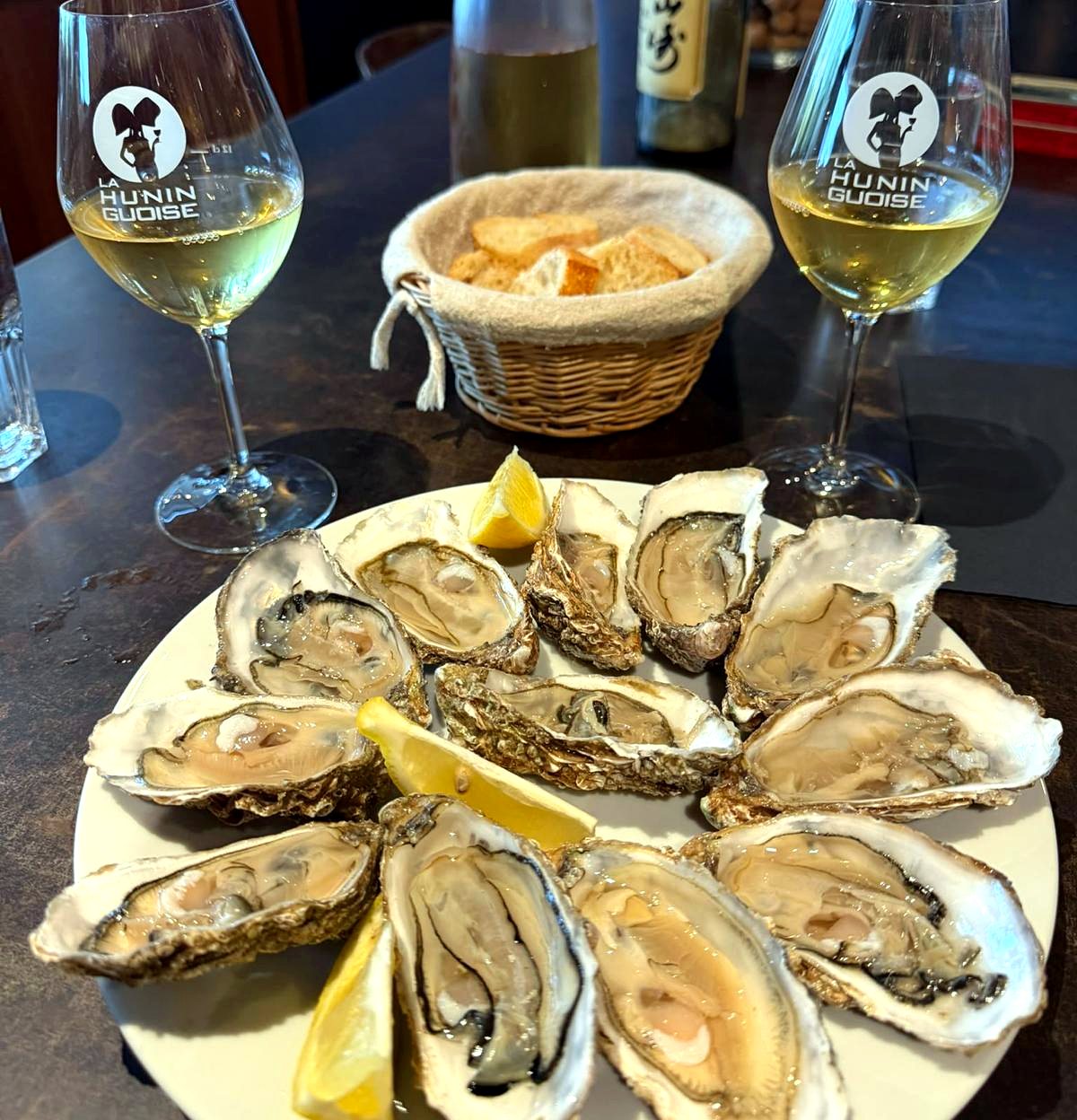
From the Channel to the Rhine: every Friday, Isigny rock oysters, size No. 3, opened to order, with a glass of dry white from our wine shop.
Prices
Isigny rock oysters No. 3, opened to order, every Friday while the delivery lasts.
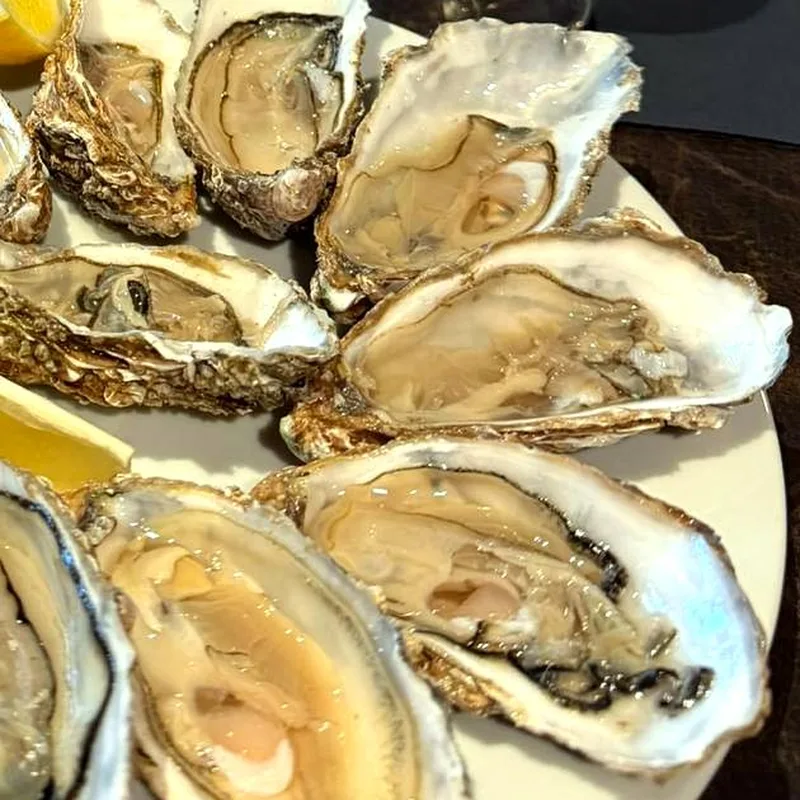 12 €6 oysters
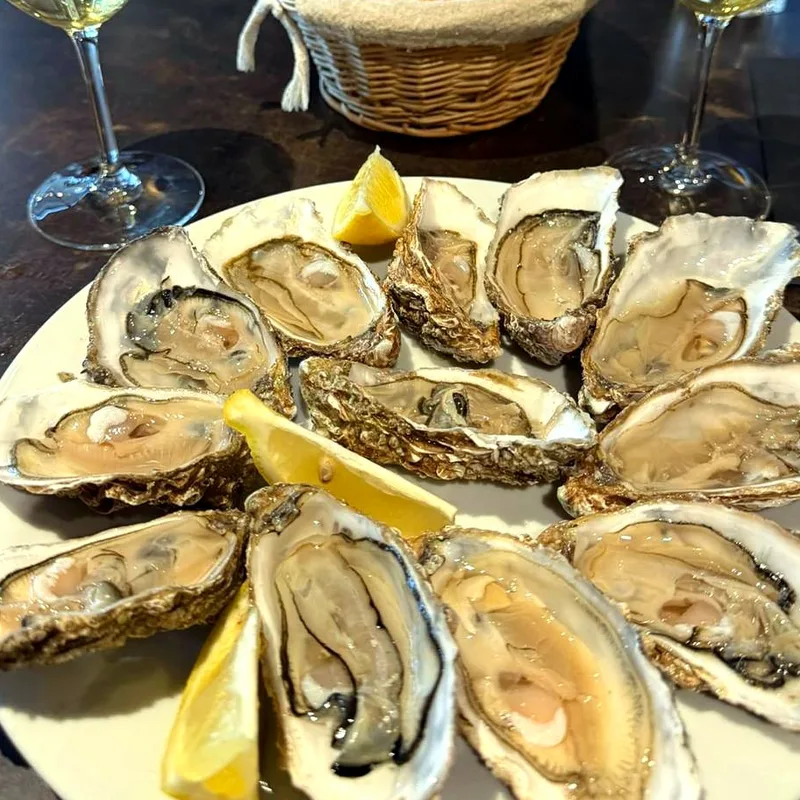 19 €12 oysters
Reserve your oysters for Friday
Set aside your 6 or 12 oysters, and your bottle if you like. Order by Wednesday 12 noon; after that, subject to stock.
Isigny, between land and sea
Isigny-sur-Mer is a small Normandy port between the Bessin and the Cotentin, also famous for its butter and cream. Its oysters grow in the Baie des Veys, where four rivers, the Aure, Vire, Douve and Taute, flow into the Channel.
At low tide, the oyster tables stretch across the foreshore as far as the eye can see: around 170 hectares of beds, worked to the rhythm of the tides.
Isigny-sur-Mer and the Baie des Veys · Open the full map · © OpenStreetMap
Normandy oysters, a long story
Oysters have been gathered on the Normandy coast since antiquity. For centuries the wild flat oyster made the region's name, until disease and over-fishing almost wiped it out.
Since the 1970s, farmers have raised the rock oyster. Normandy has become one of France's leading oyster regions, with four main 'crus': the west coast of the Cotentin, Saint-Vaast-la-Hougue, the Baie des Veys (Isigny) and the Côte de Nacre. Since 2023, 'Huître de Normandie' has been a protected geographical indication (PGI).
Iodine and hazelnut: Isigny's signature
In the Baie des Veys, fresh river water brings nutrients and plankton while the sea brings salt and iodine. The oysters grow fast here: often ready in about two years, where it takes three or four elsewhere.
The result: plump, firm flesh, a bold iodine attack, then a gentle finish with hints of hazelnut.
Three whites from our wine shop
In stock at Cave de Huningue and La Huninguoise. Buy at wine-shop prices to take home, or reserve your bottle with your oysters.
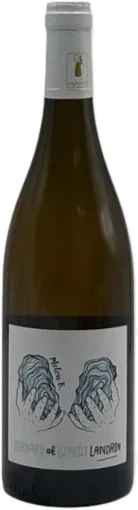
Muscadet Coteaux de la Loire « Melon B » 2025
Domaine Landron-Chartier
The great oyster classic: crisp, saline, refreshing. With oysters on the label.
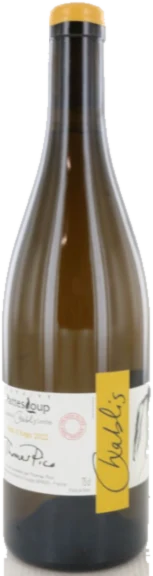
Chablis 2022
Domaine Pattes Loup, Thomas Pico
A grower's Chablis, taut and chiselled, extending the iodine.
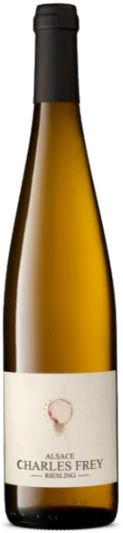
Alsace Riesling 2023
Domaine Charles Frey
A dry biodynamic Alsace Riesling, fresh and mineral, to stay close to home.
Why No. 3?
The size number shows the weight: the smaller the number, the bigger the oyster. A No. 3 weighs 66 to 85 g, the ideal size to enjoy the flesh without it filling your whole mouth.
How to enjoy them
Plain, with a twist of pepper, a squeeze of lemon or a little shallot vinegar, bread and butter. In the glass: a dry, mineral white from our wine shop, Muscadet, Chablis, Sylvaner or Riesling.
How to open an oyster
- Protect the hand holding the oyster with a thick, folded tea towel or a cut-resistant glove.
- Use a proper oyster knife with a short, rigid blade, never a kitchen knife.
- Lay the oyster cupped side down, hinge (the pointed end) towards you.
- Slide the blade in at the side, two-thirds of the way along, between the shells, without forcing.
- Run the blade flat along the top shell to cut the muscle, then lift off the lid.
- Pour away the first liquid: the oyster makes fresh, finer water within minutes. Enjoy cold.
FAQ
Can you eat oysters all year round?
Yes. The 'months with an R' rule dates from before refrigeration. In summer, during spawning, oysters can be milkier: a matter of taste, not safety.
What's the difference between 'fine' and 'spéciale'?
It's the amount of flesh relative to the oyster's total weight (the fill index). A spéciale is meatier than a fine.
How do I keep oysters at home?
Cool (5–15 °C), flat, cupped side down, in their basket and never in water. Follow the date on the label.
Should you chew an oyster?
Yes, two or three times: chewing releases the hazelnut flavour after the iodine.
Can I reserve oysters to take away?
On Fridays oysters are served on site. For the holidays, ask us: a take-away offer is being planned.